Layer 1: Connect with Self
Daily Check-Ins
The simplest way to detect risk early and build awareness before issues escalate.
Mental health risks don't start as incidents.
They begin as small, often unnoticed changes in how someone feels.
Daily Check-Ins make those changes visible and help people act on them earlier.
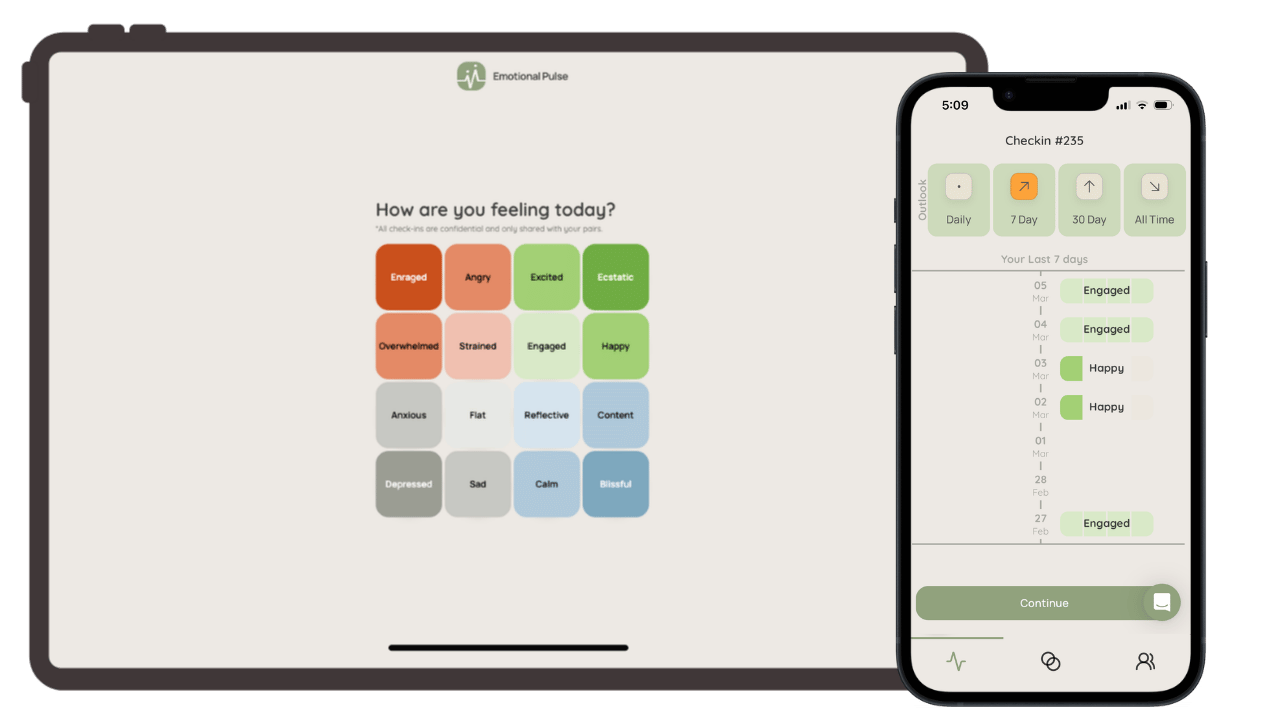

The Problem
Why Most Systems Miss Early Risk
Most organisations rely on:
Annual surveys
One data point per year. By the time results arrive, the moment has passed.
Manager observations
Relies on individual skill. People often mask how they feel at work.
Incident reporting
Only captures problems after they happen. The damage is already done.
These are lagging indicators. By the time they detect a problem, the issue has already developed, the risk is higher, and support is more complex and costly.
You can't manage risk you can't see early.
The Insight
The Earliest Indicator of Psychosocial Risk Is a Change in Emotional State
Across all psychosocial hazards, the earliest indicator is simple:

A change in how someone feels.
Before conflict.
Before burnout.
Before withdrawal.
There is always a shift in emotional state.
Risks don't escalate suddenly. They build over time.
The Solution
A Daily Habit That Creates Visibility
Daily Check-Ins create a simple, consistent habit of self-awareness. In just seconds each day, individuals:
Reflect on how they feel
A moment of honest self-awareness, making the invisible visible.
Build emotional awareness
Over time, people get better at recognising their own signals.
Recognise patterns
Repeated reflection reveals trends that a single moment never could.
This turns emotional state into a visible and trackable signal.
The Process
How Daily Check-Ins Work
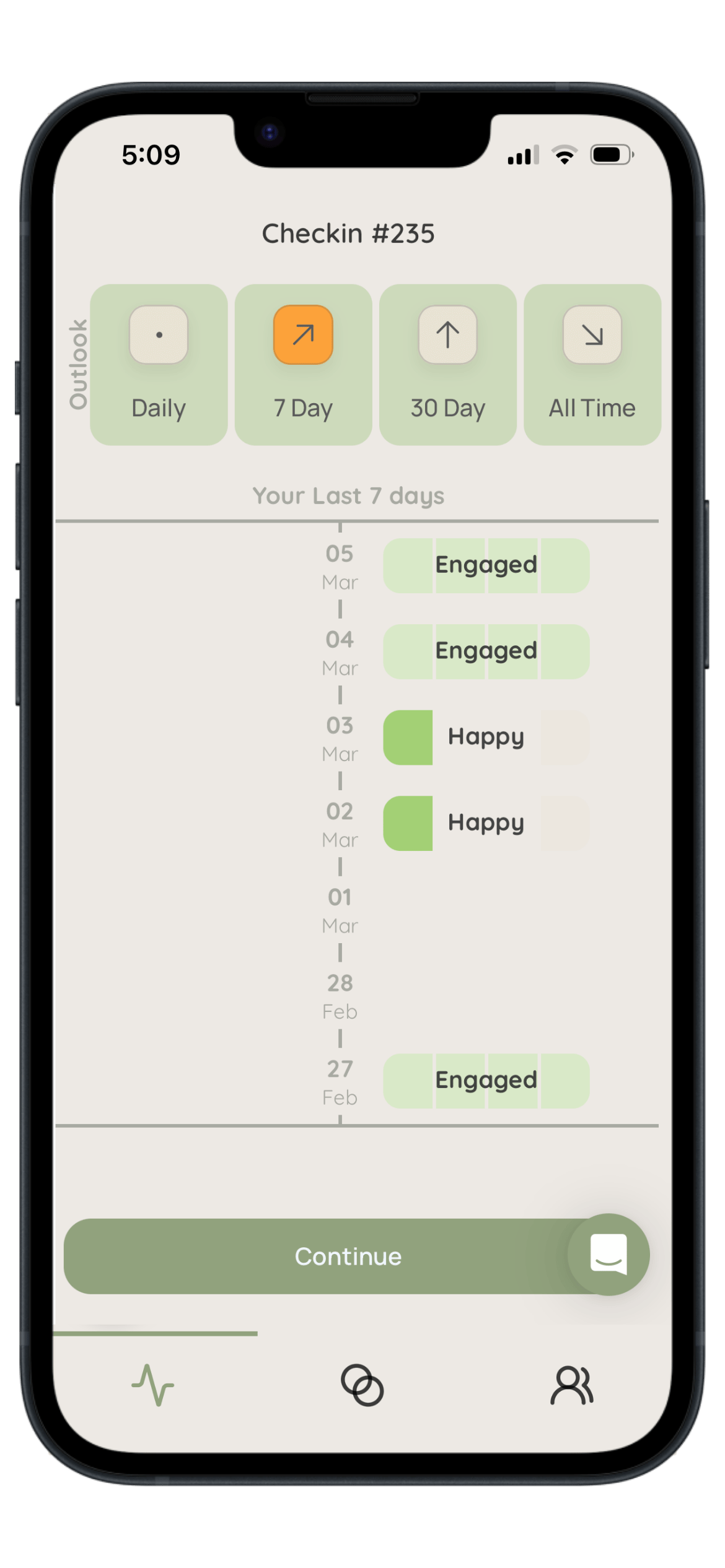
A quick, simple daily check-in designed to take seconds
Captures emotional state in real time
Builds a consistent rhythm of reflection
Tracks changes over time to reveal patterns
↳This creates a real-time, leading indicator system for mental health risk.

Beyond Awareness
How Daily Emotional Check-Ins Build Resilience and Detect Psychosocial Risk
Daily Check-Ins are not just about tracking how someone feels. Each check-in is followed by a short, guided learning experience.
Understand their emotions
Recognise early signs of stress
Learn how to respond to challenges
Build confidence in supporting others
2 to 3 minute guided audio sessions
This is how the system builds capability, not just awareness.
The Habit
A Habit That Protects You Over Time
Like putting on a seatbelt, Daily Check-Ins are a small action that creates long-term protection.
Self-awareness
Understand your emotional patterns and what drives them.
Emotional resilience
Strengthen your ability to navigate challenges over time.
Earlier action
Act sooner because you notice sooner.
Normalised conversations
Make talking about mental health part of everyday life.
Small daily actions create meaningful long-term change.

The Shift
From Invisible Risk to Early Action
Without Check-Ins
- ✕Emotional changes go unnoticed
- ✕People normalise how they feel
- ✕Support is delayed
With Check-Ins
- Early signals are visible
- Patterns can be recognised
- Action can happen sooner
Early awareness creates the opportunity for early support.
The Human Impact
Building Trust with Yourself
Before people reach out to others, they need to understand themselves.
Recognise
Notice when something isn't right, before it becomes a crisis.
Feel in control
Understand your emotional state instead of being overwhelmed by it.
Take action
Build the confidence to act on what you notice.
This is the first step in building the Bridge of Trust.
For Organisations
A Leading Indicator for Psychosocial Risk
For organisations, Daily Check-Ins provide practical, ongoing visibility into the wellbeing of their people.
Real-time visibility of wellbeing trends
Early identification of risk areas
A proactive alternative to annual surveys
Data to support WHS and psychosocial risk obligations

Next Layer
Awareness Leads to Connection
Awareness alone is not enough.
Once someone recognises how they're feeling, the next step is having someone to talk to.
This is where Trusted Pairs come in.