Layer 4: Connect with Support
Structured Escalation Pathways
Clear, trusted pathways to support when it matters most.
When someone is struggling, the hardest part is often knowing who to turn to.
Emotional Pulse removes uncertainty by making support visible, accessible, and trusted so people can get help earlier, not only when things become urgent.

The Problem
When People Need Help, They Hesitate
Even when support exists, people often do not reach out because:
They are unsure who to go to
They do not trust the options available
They do not want to overreact
They fear judgement or consequences
They are already overwhelmed
Uncertainty delays support. Delay increases risk.
The Shift
From Uncertainty to Clear Pathways
Effective support systems do not rely on people figuring things out in the moment. They provide:
Clear options
People know what support is available before they need it.
Trusted people
Support comes from people they already know and trust.
Simple next steps
No decision fatigue. The pathway is obvious.
Support works best when the pathway is already defined.
The Framework
The Emotional Pulse Escalation Framework: Structured Pathways from Distress to Support
A structured escalation pathway means people have access to multiple layers of support depending on what they need and the level of risk. This is about clarity, not complexity.
Low Risk
Trusted Peers
Trained Responders
Medium Risk
Existing Workplace Services
Professional Services
High Risk
Emergency Pathways
↳This is not about replacing support you already have. It is about organising support into a clear, trusted system people will actually use.

Flexible by Design
Built Around the Support You Already Have
Organisations may already have support systems in place. Emotional Pulse helps structure and connect them so they are easier for people to access.
Mental Health First Aiders
EAP providers
Psychologists
Wellbeing leaders
Internal support contacts
This framework works with your existing support system, not instead of it.
In the Moment
Support, Exactly When It's Needed
This is how the system responds when someone indicates they are struggling.
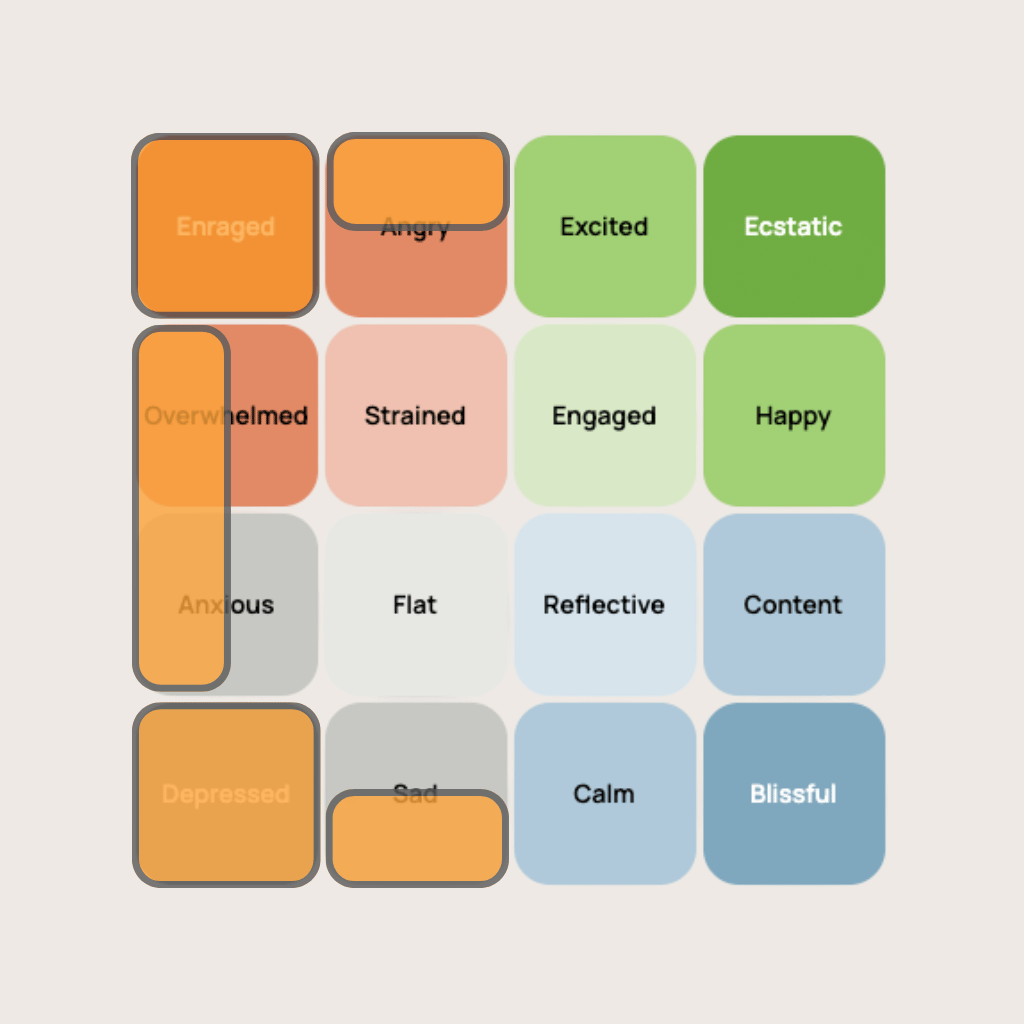
When someone checks-in in a distress zone
Replace with image
Support is always available, but never forced.
Always Available
Support Is Always Accessible
People can also access their support options directly through the app at any time, not only when prompted by a distress check-in.
Autonomy
People choose when and how to access support.
Control
Support is there on their terms, without pressure.
Ease of access
Everything they need is in one place, always within reach.

Capability
Helping People Support Each Other with Confidence
Knowing who to turn to is only part of the solution. People also need confidence that they know how to support someone without making things worse.
Listening well
Being fully present and attentive.
Understanding needs
Recognising what someone actually needs.
Responding appropriately
Saying the right thing at the right time.
Knowing when to escalate
Recognising when professional support is needed.
When More Is Needed
Knowing when and how to escalate is important
Some situations require additional structure, support, confidentiality, or escalation. The app gives first responders a risk assessment tool that helps them make decisions about what to do next.
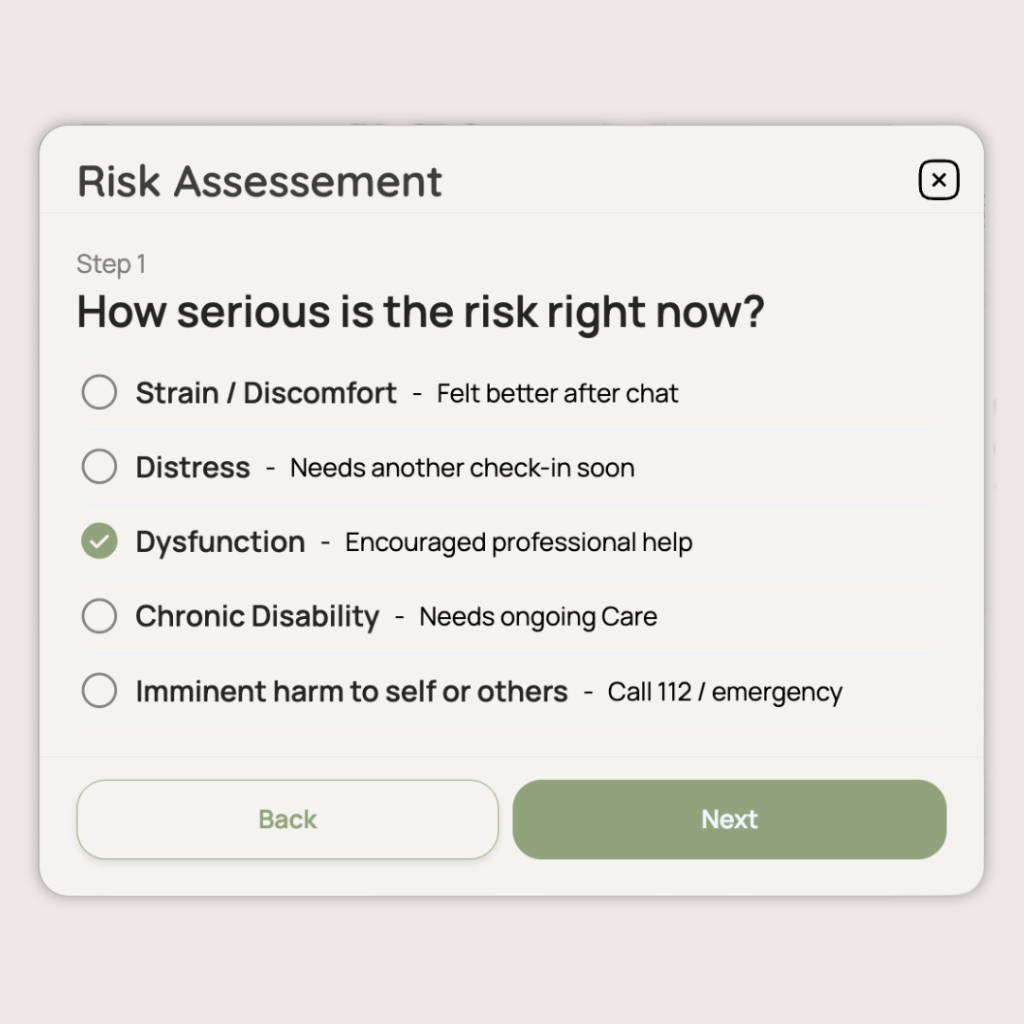
Severity
Replace with image

Internal Capability
Build Internal Capability with MHFR certification
One way organisations can strengthen this layer is by training Mental Health First Responders (MHFR). A structured internal capability that helps people support others effectively.
A practical internal support role
Trained in how to support others effectively
Uses structured frameworks for listening, responding, and escalating
Helps identify when professional support is needed
→This is one way to strengthen a support system, not the only valid pathway.
AI-Supported
Support, Even When No One Is Immediately Available
The app also includes a voice-based AI guide trained in structured support frameworks. This guide can help a person:
Navigate difficult emotions
Reflect on what they need
Work out the next step
Connect with the right support person
The AI is a guide and bridge, not a replacement for human support. It helps people take the next step toward the right person.
Experience what it's like talking to our AI MHFR.
The Outcome
How Structured Escalation Reduces Psychosocial Risk and Builds Psychological Safety
People know who to turn to
Support happens earlier
Issues are less likely to escalate silently
Organisations build trust and psychological safety
Support becomes easier to use in practice
When people trust the pathway, they use it.