Accountable for the risk. Now with the visibility to act on it.
Workplace laws now require organisations to actively manage psychosocial hazards. Most leaders are responsible for a risk they have no reliable way to see early. Reaching in changes what you can see, and leaves the evidence that you acted.
What you are accountable for
The Code of Practice requires organisations to actively identify, assess and review psychosocial risks on an ongoing basis, not just document them annually. Under the model WHS laws adopted in most Australian jurisdictions, officers also carry a personal duty of due diligence. In plain terms it asks six things of you.
- 1
Keep your knowledge of work health and safety current.
- 2
Understand the operations you are responsible for and the hazards and risks in them, psychological as well as physical.
- 3
Make sure the resources and processes exist to eliminate or minimise those risks.
- 4
Make sure there is a process for receiving information about hazards, incidents and risks, and for responding to it in a timely way.
- 5
Make sure the organisation has, and uses, processes for complying with its duties.
- 6
Verify that all of the above is actually happening.
Four of the six are about information and verification. That is where most organisations are exposed: not a lack of intent, a lack of a reliable signal.
$67,400
Median compensation for a serious psychological claim. More than four times the median across all serious claims.
35.7 weeks
Median time lost for a serious psychological claim. The longest of any claim category.
Safe Work Australia, Key Work Health and Safety Statistics Australia 2025 (2023–24 data).

What you can see today, and what you cannot
You are accountable for risk without real visibility
Workplace laws now require organisations to actively manage psychosocial hazards. But in practice:
Surveys are infrequent and quickly outdated
EAP data is underutilised and reactive
Managers rely on perception, not evidence
Issues surface only after escalation
So leaders are left exposed. Responsible for managing risk without a reliable way to see it early.
With reaching in, you see
- Which pressures are coming up across the organisation, how widespread they are and where they are concentrating, by team or site
- Whether they are rising or falling, cycle on cycle
- How many people in each team were reached
- That check-ins are happening between the calls
You never see
- ✕Any individual
- ✕Who said what
- ✕Quotes, names or job titles
- ✕Anything a person did not choose to share
Themes appear only across groups of at least five people. Smaller teams are combined.
Three solutions, one model
What each solution does for you
The call that reaches everyone
Proactive check-ins
The control that reaches everyone, and the record of it: a de-identified report each cycle showing what is straining your people, where, and how it is moving. No individual appears in it.
Proactive check-insThe people who act
Mental Health Training
Leaders and responders inside your organisation who know what to say, and who act on what the report shows, so the response does not depend on a vendor.
Mental Health TrainingThe leading indicator
The Emotional Pulse App
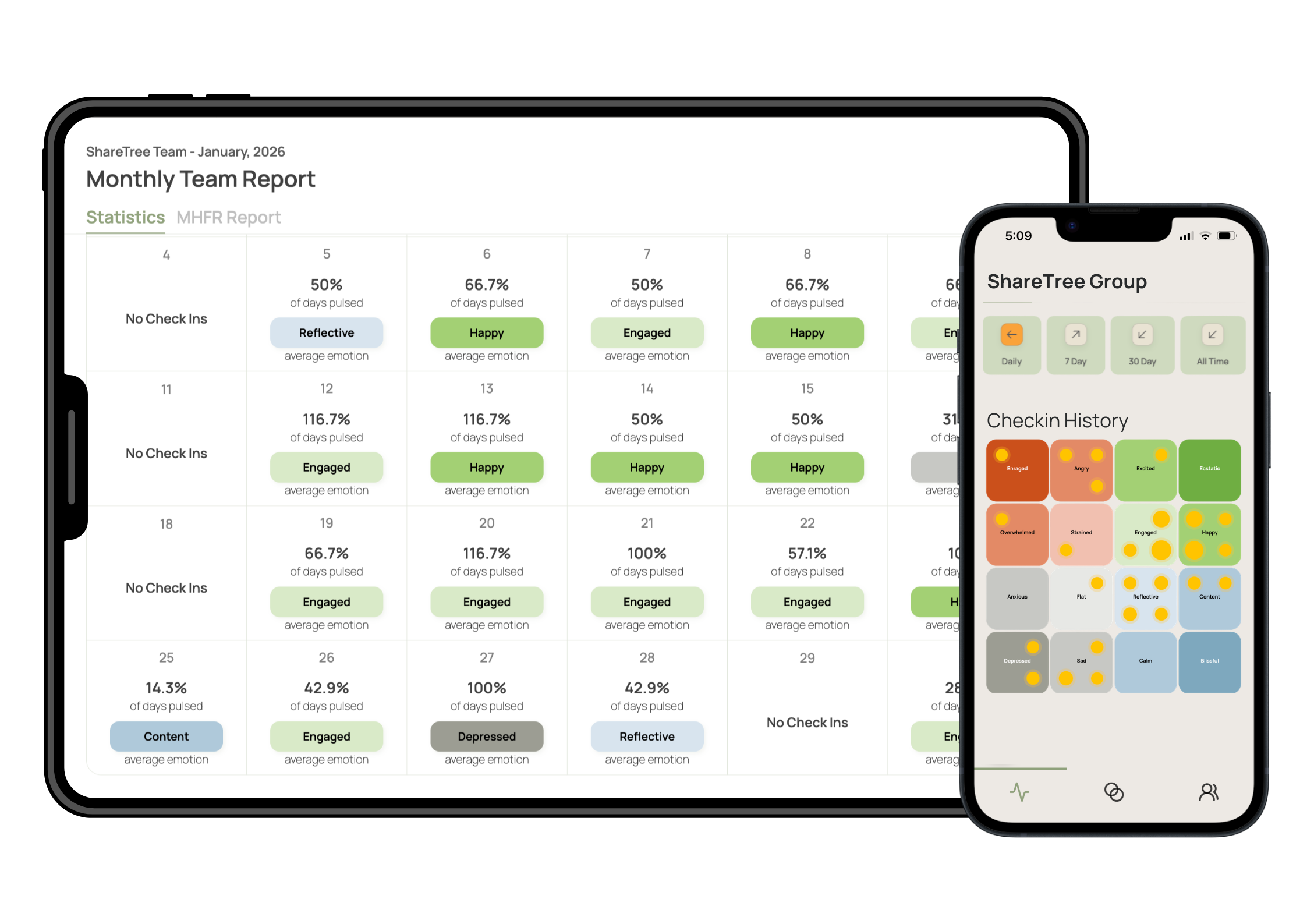
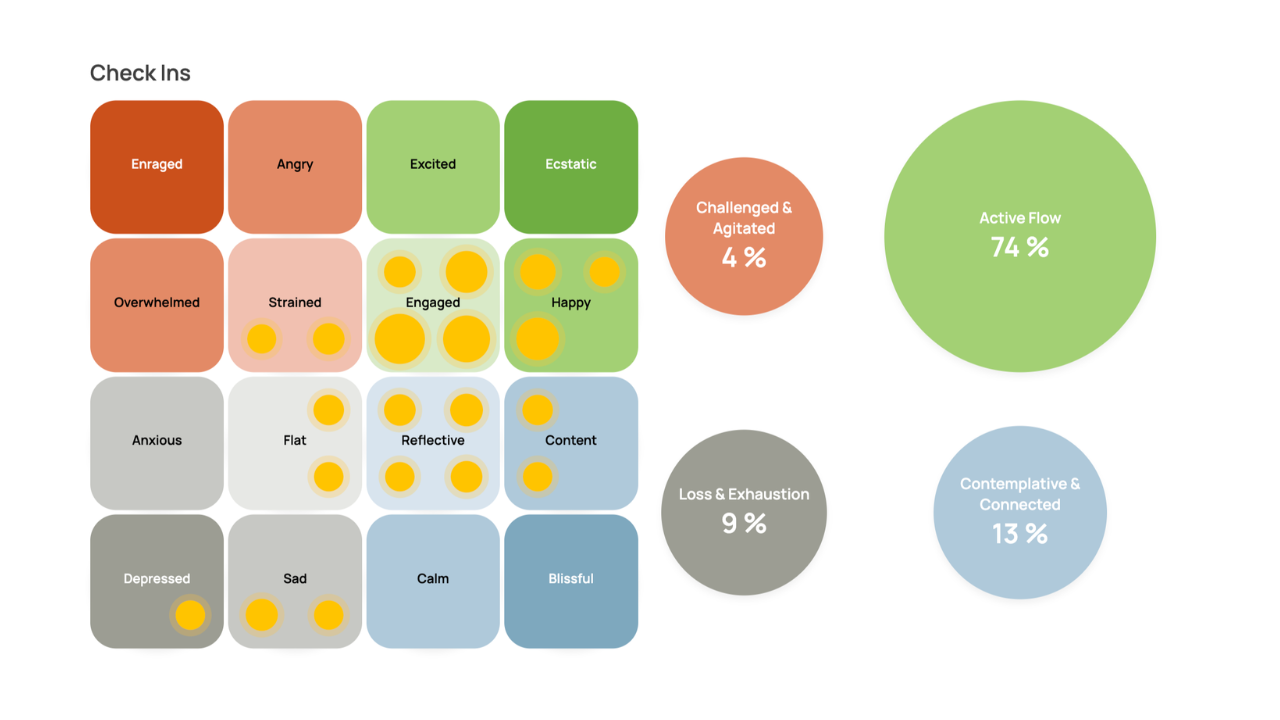
The leading indicator between the calls: that check-ins are happening, and the general picture across teams, never who said what.
Emotional Pulse App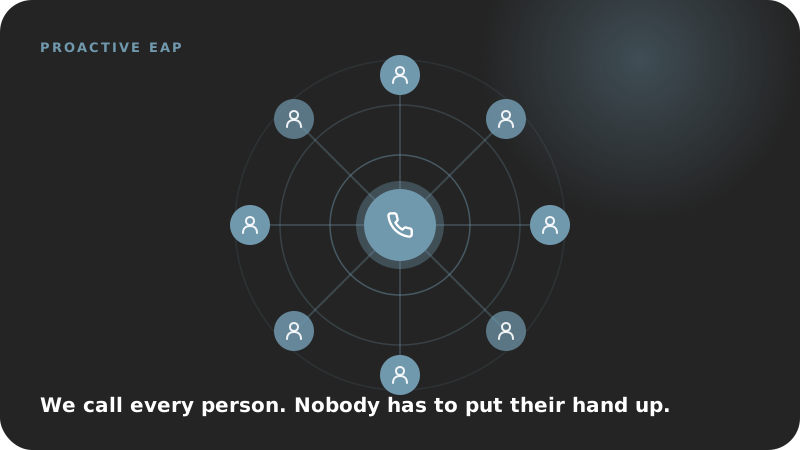

The call that reaches everyone
Proactive check-insWhat it asks of you
- 1
Sponsor it visibly.
Your people decide whether this is real by whether their leaders treat it as real. A sentence from you at the start matters more than the launch email.
- 2
Let the report change something.
The Proactive EAP tells you what is wrong. Fixing it is still yours. A theme that is reported and not acted on costs more trust than no report at all.
- 3
Protect the trust it depends on.
Your organisation agrees in writing not to try to work out who said what and not to use the service for performance management or discipline. Hold that line when someone asks you to cross it.
- 4
Thirty minutes to start.
One department, one cadence, one report. Then decide.
Replace policy intent with verifiable evidence
In the event of an audit, boards aren't asked if they have a policy. They are asked if they can demonstrate active, ongoing risk management.
When emotional signals are visible, support is structured and trends are reviewed regularly, you move from documented intention to demonstrable control.
Sample report
What you see after a check-in cycle
Click a factor, switch teams, or step through identify, assess, control and review. This is a sample for a fictional organisation with invented numbers.
Sample cycle, quarterly check-ins
Riverbend Freight Co.
Employees spoken to
81%
194 of 240
Unsuccessful contacts
11
to follow up
MHFR sessions booked
9
Avg. call duration
7:40
Work organisation
- Job security & precarious workNo signal this cycle
Social factors
- Organisational & workgroup cultureNo signal this cycle
- ⚠HarassmentNo signal this cycle
- ⚠Violence at workNo signal this cycle
Work environment
Work organisation · across all teams
Workload & work pace
- Mentions
- 28
- People who raised it
- 19
- Peak severity
- Chronic
- Trend vs prior
- ↑ 18%
By team
- Warehouse12
- Transport10
- Customer service4
- Finance and admin2
What people said, de-identified
- Shifts have been short-staffed most weeks since peak season started.
- Pick targets went up without a change to breaks or rosters.
- People are skipping breaks to keep up with the dock schedule.
Plain-language summaries, never anyone's own words.
All 20 factors are listed, including those where nothing surfaced. No signal means nothing was raised this cycle; it is not an assessment that the factor is safe or controlled.
- Team hiddenFewer than five people, rolled up into the totals
92 people · this cycle
Warehouse
Top factors raised
- 1Workload & work pace
- 2Job demands
- 3Support & supervision
Themes appear only for groups of five or more. Smaller teams fold into the totals so no one can be singled out.
Every person was offered a check-in this cycle, so hazards surface from the whole workforce, not only the people who speak up.
In this sample, Workload & work pace and Job demands surfaced most, concentrated in Warehouse and Transport. One escalation factor was raised and followed up.
Each theme carries a severity mix, the number of people who raised it and the trend against the last cycle.
Workload was raised by 19 people, mostly at strain and distress, up 18% on the prior cycle. That is the assessment input: how widespread, how serious, which way it is moving.
Your leaders and responders decide the controls, in consultation with the people affected. The report shows where to act first.
Example controls a business might record: rebalance peak rosters in Warehouse, add a mid-shift break, give Transport earlier notice of roster changes.
The next cycle is comparable with this one, so you can see whether exposure fell after you acted, not only whether actions were done.
Working hours & schedule is down 6% after last cycle's change to roster notice. Leadership is down 10%.
Questions leaders ask

See the risk early enough to act on it.
A 30-minute conversation about your organisation, what you can see today, and where to start. No obligation.
Also written for
Risk Managers
A control that reaches everyone, a report that sits beside your register, and the record that it ran.
Read morePeople & Culture Leaders
A programme your managers can run and your people will use, started within four weeks.
Read moreTeam Leads & Employees
What happens on the check-in call, what is kept, and who sees what. Written for the people being called.
Read more