


Challenges

Reducing mental health claims

A claim is the last signal, not the first. By the time a psychological injury reaches your insurer, the strain behind it has been building for months. Reaching in finds it earlier, and gives you the record that you acted.

Estimate your cost of inactionThe calculator on our Proactive EAP page. No email needed to see the result.
Book a discovery call30 minutes. No obligation.
Emotional Pulse reporting on de-identified themes by team

What a claim now costs

High compensation cost representation
$67,400

Median compensation for a serious psychological claim. More than four times the median across all serious claims.

Extended time off work representation
35.7 weeks

Median time lost for a serious psychological claim. The longest of any claim category.

Rising mental health claims representation
+14.7%

Serious mental health condition claims rose 14.7% in a single year, and 161.1% over the previous decade.

Source: Safe Work Australia, Key WHS Statistics Australia 2025 (2023–24 data).

Around 1 in 4 people face a mental health challenge in a year. Around 5% ever use a traditional EAP. The rest are reached by nothing until something goes wrong.

A claim is where the evidence ends up, not where the risk starts

Surveys lag. Exit interviews are after the fact. Claims data is the most lagging indicator of all: it records harm that has already happened, after the absence, the dispute and the premium increase.

Most existing systems surface risk only once behaviour changes or a claim is filed.

The costs that arrive before the claim

A claim is where the money becomes visible. Most of it was spent long before, in six places.

  1. WorkCover and mental health claims

    The visible one: compensation and lost time, and the premium that follows. By the time it is a claim, the other five have already been paid.

  2. Absenteeism and performance

    The days off, and the far larger cost of people at work but not really working. Presenteeism is where most of the money goes, long before anyone is absent.

  3. Turnover and recruitment

    People who leave rather than raise it. Gallup puts the cost of replacing an employee at one-half to two times their annual salary, and calls that a conservative estimate.

  4. Insurance premiums

    Every claim pushes next year's premium up, and the increase outlives the claim.

  5. Disputed claims and culture

    Where there is no record of consultation or monitoring, claims are harder to answer and the culture that produced them is harder to change.

  6. Employer brand

    A public incident, a regulator's finding, or a reputation among the people you want to hire and keep. It sits outside the dollar figures and costs more than most of them.

The real cost of a reactive EAP is what it doesn't prevent. It reaches people once they are already in crisis, after most of this has been spent. Reaching in gets there earlier, and leaves the record that you did.

Count the cost of inaction in your own numbers

Our model puts the cost of inaction at around $560 per employee per year on conservative assumptions. Localise it to your own headcount and salaries.

The on-page calculator

The calculator on our Proactive EAP page. No email needed to see the result.

Free Excel calculator: the cost of inaction

Put in your team size, average salary, and current level of support. It returns the five pillars, a total, a per-employee figure, and the five-year forecast, with a chart and every source attached. Deliberately conservative, and yours to keep.

The law has landed

Prosecutions were for the absence of a system, not the harm itself

Recent prosecutions share one pattern. The penalties were for what was missing: no risk assessment, no policy that was enforced, no reporting pathway, no training. Regulators looked for evidence of ongoing monitoring and timely response, and found none.

Court Services Victoria, 19 October 2023

Melbourne Magistrates’ Court: pleaded guilty to failing to provide and maintain a safe workplace; convicted and fined $379,157 plus $13,863 in costs.

Workers at the Coroners Court were exposed to traumatic material, role conflict, high workloads, poor workplace relationships and inappropriate behaviours. Multiple workers took leave reporting anxiety, PTSD and stress, and the period included a worker’s death. WorkSafe found no adequate process to identify risks and no adequate risk assessment of the risks to psychological health.

Source: WorkSafe Victoria, “Court body fined almost $380,000 for deadly work culture”
Printco (Aust) Pty Ltd and its director, 1 March 2024

Moorabbin Magistrates’ Court: the company fined $20,000 for failing to provide and maintain a safe system of work; the director fined $20,000 for failing to take reasonable care as an officer; $9,309 in combined costs.

A sub-contractor suffered verbal abuse, intimidation and threats over about four years and developed a mental injury that left him unable to work. The company’s bullying policies were found inadequate: no reporting procedures, definitions, examples or worker training.

Source: WorkSafe Victoria, “Sign company and bully boss fined $40,000”

Blisspell Pty Ltd, 30 May 2025

Heidelberg Magistrates’ Court: convicted and fined $100,000 plus $6,060 in costs for failing to provide or maintain a workplace safe and without risks to health.

The company had no formal system to identify, prevent, manage, investigate or respond to inappropriate behaviours. A worker had complained about comments and text messages of a sexual nature from a director. The court found it reasonably practicable to have had a workplace behaviour policy with reporting and response procedures, implemented through training.

Source: WorkSafe Victoria, “Toy company fined $100,000 over sexual harassment risk”

The duty follows the worker home

As the ABC reported in 2020, the NSW Court of Appeal found that a woman killed by her partner while working from home died in the course of her employment; her family was awarded $450,000 in workers compensation. The duty follows the worker home, and so does the need to know how people are.

ABC Radio National Law Report, 6 August 2020.

Three solutions, one model

Find it before it becomes a claim

The call that reaches everyone

Proactive check-ins

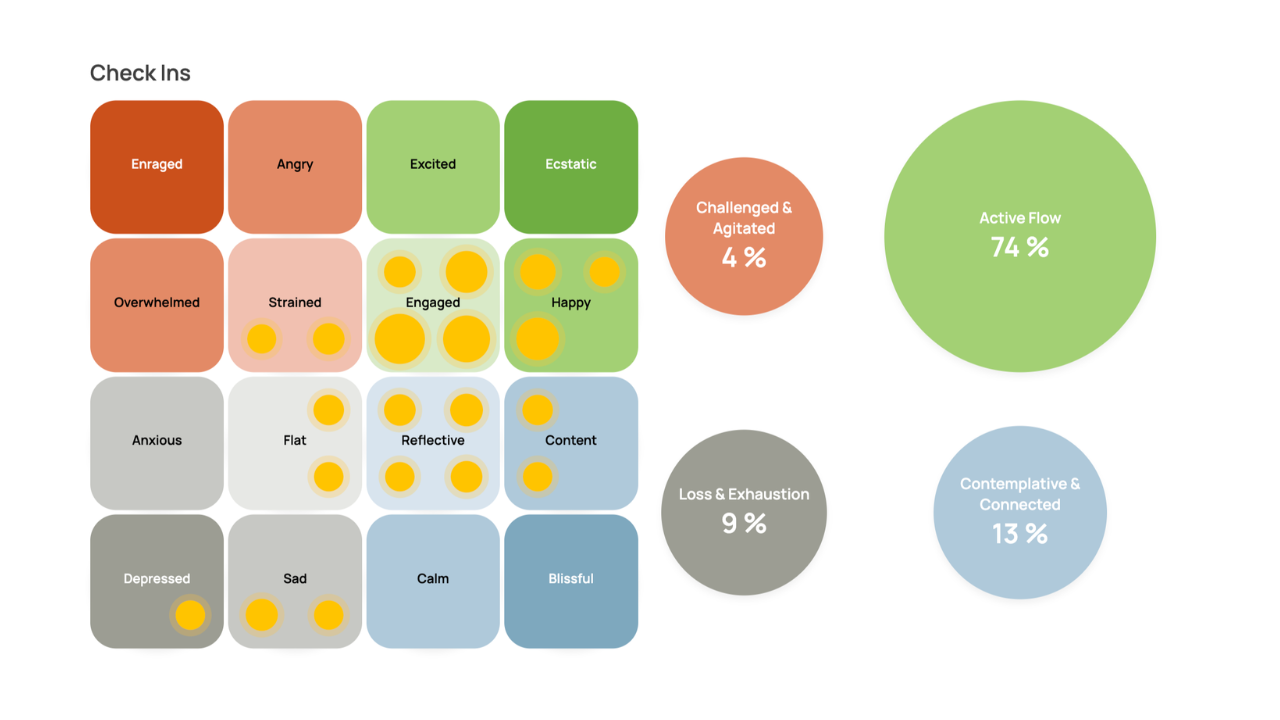
Every person gets a check-in, on a cadence you choose. Themes surface before harm, de-identified, with the record that you asked and acted.

Proactive check-ins

The people who act

Mental Health Training

Leaders and responders who notice strain, know what to say, and act, instead of pushing for targets.

Mental Health Training

The leading indicator

The Emotional Pulse App

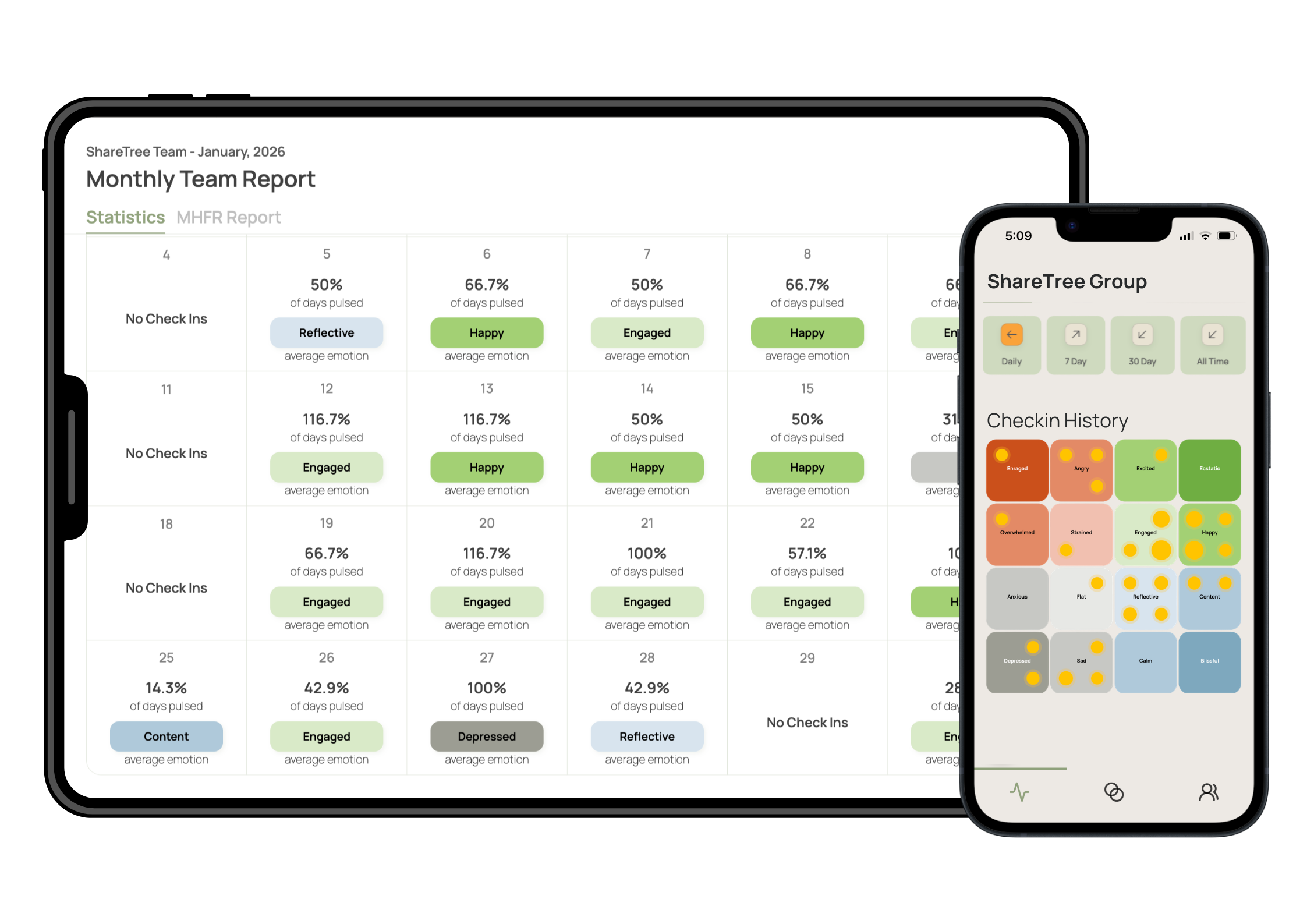
The daily pulse between calls, so the trend is visible monthly, not at claim time.

Emotional Pulse App
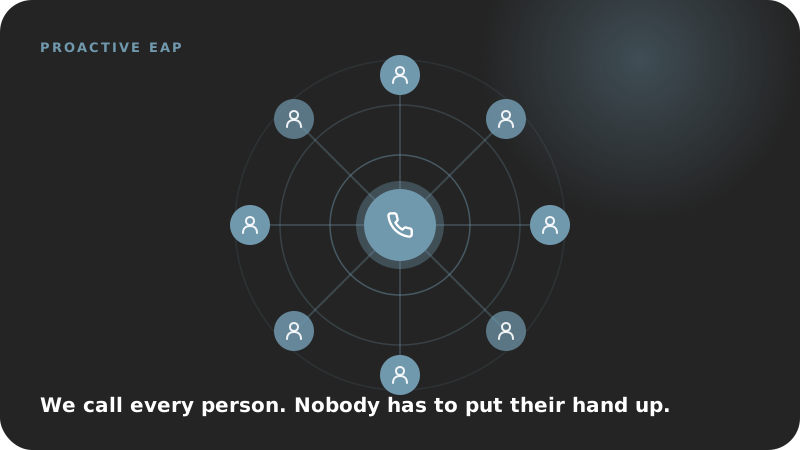
Proactive EAP: a responder reaches out to every personMental Health First Responder certified course: people from an office, a worksite, a clinic and a leadership team standing togetherEmotional Pulse on desktop and mobile

The call that reaches everyone

Proactive check-ins

Workplace mental health action returns $2.30 for every $1 invested (PwC and beyondblue, 2014).

Sample report

What you see after a check-in cycle

Click a factor, switch teams, or step through identify, assess, control and review. This is a sample for a fictional organisation with invented numbers.

Sample cycle, quarterly check-ins

Riverbend Freight Co.

Sample data, not a real organisation

Employees spoken to

81%

194 of 240

Unsuccessful contacts

11

to follow up

MHFR sessions booked

9

Avg. call duration

7:40

Work organisation

  • Job security & precarious workNo signal this cycle

Social factors

  • Organisational & workgroup cultureNo signal this cycle
  • ⚠HarassmentNo signal this cycle
  • ⚠Violence at workNo signal this cycle

Work environment

Work organisation · across all teams

Workload & work pace

Mentions
28
People who raised it
19
Peak severity
Chronic
Trend vs prior
↑ 18%

By team

  • Warehouse12
  • Transport10
  • Customer service4
  • Finance and admin2

What people said, de-identified

  • Shifts have been short-staffed most weeks since peak season started.
  • Pick targets went up without a change to breaks or rosters.
  • People are skipping breaks to keep up with the dock schedule.

Plain-language summaries, never anyone's own words.

All 20 factors are listed, including those where nothing surfaced. No signal means nothing was raised this cycle; it is not an assessment that the factor is safe or controlled.

straindistressdysfunctionchronicimminentEscalation factor, flagged on any mention

Questions about claims

Worth 30 minutes?

A 30-minute conversation to scope your team, your claims picture and the right place to start. No obligation.